Question remains on definition of ‘light industry’
Before the latest Woodstock Town Council meeting, Gordon Porter, a concerned resident and member of the group “Our Town, Our Voice,” sent an e-mail to council members and the River Valley Sun.
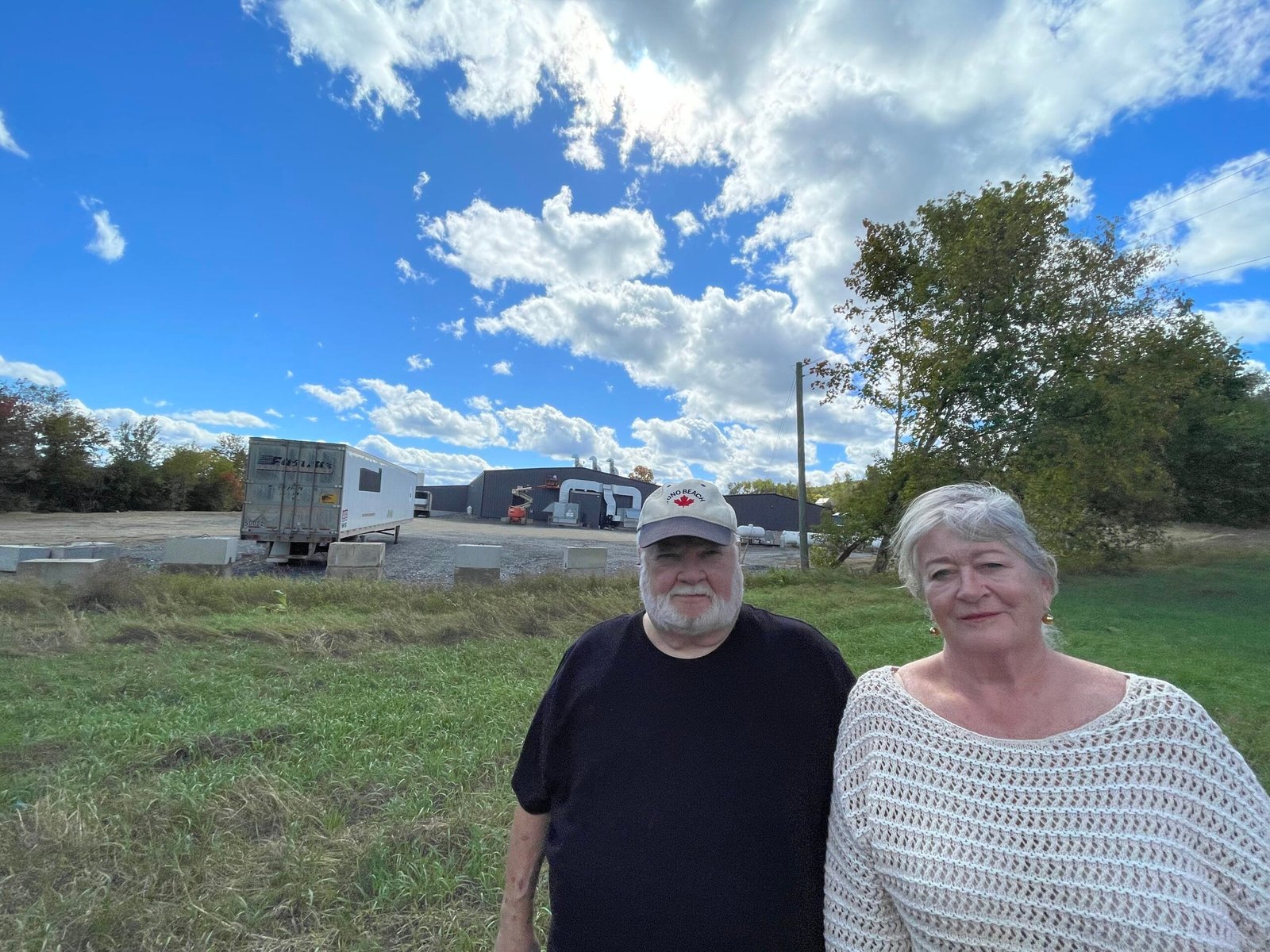
The group of concerned residents was formed after the Covered Bridge Potato Chips plant began operating in the Woodstock Industrial Park, disrupting the lives of residents who live in the neighbouring subdivision.
In his email, Porter reiterated the community members’ dissatisfaction with how their concerns about the potato chip manufacturing operation have been handled to date, citing the location as the primary issue.
“Residents also note that the Municipal Plan designates light manufacturing for the current industrial zone,” Porter wrote. “The plant’s scale and intensity exceed that definition and are inappropriate beside long-standing residential streets.”
He expressed frustration with the amount of responsibility that town officials have placed on the Province regarding regulations. He urged the municipality to take greater responsibility for fixing this itself.
“The Town of Woodstock has both the authority and the obligation to act now,” explained Porter.
During the Nov. 25 council meeting, CAO Allan Walker gave an update on Covered Bridge Chips’ operation. So far, he said, the propane pad has been moved outside of the buffer zone. Jersey bars have been placed to mark out the buffer zone and prevent traffic incursions. Walker also revealed that he’d received a fence design from the engineering firm late that day but hadn’t yet had time to go through it, adding that evergreens were hoped to be planted this year, but weren’t sourced in time and will be planted in the spring.
He mentioned that Covered Bridge had reached out to two representatives of Our Town, Our Voice and intended to have further dialogue with them in the future.
Walker then addressed the complaint that Covered Bridge Chips did not meet the light-industry standard.
For his definition, he quoted the International Energy Agency. This agency classifies light industry as industrial activity that typically requires less energy to operate, such as food processing, textiles, consumer goods, and vehicles. Walker explained that, according to this agency’s definition, Covered Bridge was, in fact, classified as light manufacturing.
“I need to clarify that this is a mistaken assertion,” said Walker in response to the argument that Covered Bridge Chips is not light industry. “Food processing is consistently classed as light industry.”
The International Energy Agency is based in Paris, France. It has 32 member countries, including Canada. The organization’s focus is on energy security and offers policy recommendations based on that priority. When they define light industry, their focus is more about energy use than how good a neighbour companies are.
Closer to home, the New Brunswick provincial government defines it based on each municipality’s zoning laws.
For example, Saint Andrews Special Advisory Planning Committee defines ‘Light Industrial Use’ as the use of “land, buildings, or structures for the making of finished products or parts, usually from already prepared materials, including the processing, fabrication, assembly, treatment, packaging, storing, sales, and distribution of such products or parts, but excluding conventional industrial uses, and not resulting in the emission of odours, fumes, noise, cinder vibrations, heat, glare, or electrical interference.”
Fredericton’s Bylaw No. Z-05 defines light industry as “a use engaged in the manufacturing of a finished product, predominantly from previously prepared materials and may include secondary uses such as storage, packaging and sales.”
Fredericton’s clarifies heavy manufacturing as “a use engaged in the basic processing and manufacturing of materials or products, predominantly from extracted or raw materials or manufacturing processes that potentially involve an obnoxious emission of odour, smoke, dust, soot, dirt, noise, gas fumes, vibration, water-carried waste, or other obnoxious emission or refuse and may include secondary uses such as storage, packaging and sales.”
According to Woodstock’s own zoning bylaw documents NO Z-501, dated Februrary of 2024 their definition says “a building or structure in which component parts are manufactured, assembled, processed or repaired to produce a finished product that can be sold onsite but does not include an industry involving stamping presses, furnaces or other machinery that emits dirt, dust or noxious fumes into the air or that results in noise or vibration beyond the property.”
Under provincial guidelines, municipal bylaws, not an international organization like the one Walker quoted, determine what constitutes light industry in this area.
At the end of the CAO’s Covered Bridge Chips update, council members agreed they needed to create an ad hoc development committee to prevent future development conflicts.
“We’ve certainly had some of our bylaws called into question through conversations with community members in relation to the Covered Bridge Chips,” said Mayor Trina Jones.
Councillors discussed the need to review and revise some bylaws, particularly those related to subdivisions, buffer zones, and noise.
If River Valley Sun readers would like to see the bylaws we referenced in this story, you can visit the links below:
Saint Andrews:
Fredericton:
https://www.fredericton.ca/sites/default/files/2023-04/zoningbylawz5.pdf
Woodstock: