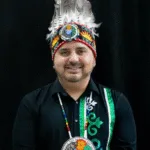
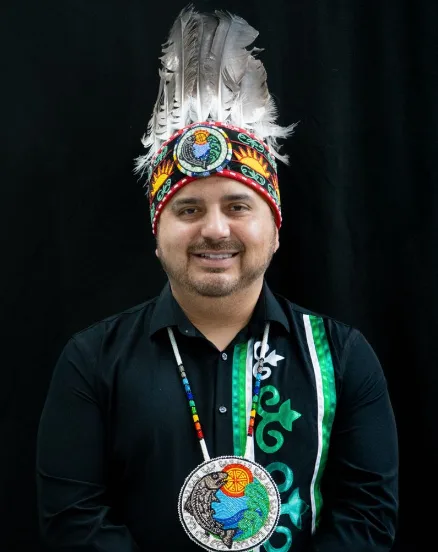
Move has been a ‘long-time coming’ – Chief Ross Perley
By John Chilibeck, Local Journalism Initiative Reporter, The Daily Gleaner
A First Nation in northwestern New Brunswick is celebrating a new court facility that will serve its Indigenous members and remove a barrier to justice, the community’s chief says.
In an unusual move, the Holt Liberal government agreed to set up the court facility for members of Neqotkuk, or Tobique First Nation, in the nearby settlement of Carlingford, only about a 14-minute drive away.
Neqotkuk’s chief and council, elders, and other community members joined Chief Judge Brian McLean of the provincial court, former lieutenant-governor Graydon Nicholas (from Neqotkuk), and Social Development Minister Cindy Miles to officially open the new court facility Sept. 26.
“This has been a long-time coming,” Chief Ross Perley said in a prepared statement.
“For too long Neqotkuk has lacked easy access to justice that can meet the needs of our community. Since the closure of Perth and Grand Falls courts, our community members have struggled to attend court due to barriers such as low incomes and transportation. We’re happy the province has recognized the need to accommodate for more accessible justice services for our community.”
Nearly two decades ago, the provincial government closed several small-town courthouses, including Perth’s. Another wave of consolidations followed in 2015, when the court in Grand Falls closed. Those closures meant Indigenous people from Neqotkuk, a First Nation where about 1,700 people live, had to travel about an hour south to Woodstock’s courthouse when seeking justice or facing charges.
Many people who live in the community are poor and don’t have enough money for a long drive.
A Department of Justice spokesperson told Brunswick News that the court near Neqotkuk would hear pleas and first appearances, as well as sentences, for members of that community who are not in custody (with charges arising out of Victoria County). Anyone requiring a trial or who is in custody will have their case heard in Edmundston, an hour’s drive in the other direction.
Jeremy Trevors said the only other court in a First Nation in the province is a healing-to-wellness court in Elsipogtog, New Brunswick’s biggest Indigenous community, which runs somewhat differently than the new court for Neqotkuk.
The latest initiative, he said, responded to the chief judge’s decision to transfer charges stemming from Victoria County and heard in the Woodstock Provincial Court to Edmundston.
“This move aimed to leverage additional resources available in Edmundston, better distribute workload between the two courts, and enhance timely access to justice,” Trevors wrote in an email.
“Meanwhile, the Neqotkuk community has shown interest in establishing a healing to wellness court. Recognizing that creating such a court involves extensive planning and the coordination of wraparound services, the Department of Justice collaborated with the Neqotkuk community to introduce a plea and sentencing court as an interim measure to address the community’s needs.”
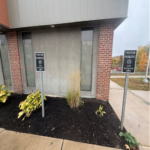
The First Nation owns the building in Carlingford, but the provincial government invested $480,000 in renovations and equipping it properly.
Over the years, rural politicians denounced courthouse closures throughout the province but had little success winning them back.
The Liberal government, however, has tried since coming to office in late 2024 to seek reconciliation with First Nations, whose leaders drew battle lines with the previous Higgs Progressive Conservative administration on key issues.
First Nations leaders had demanded a public inquiry into what they called the systemic racism Indigenous people faced in the justice system, an idea that was rejected by former Premier Blaine Higgs.
But last March, Premier Susan Holt and Indigenous Affairs Minister Keith Chiasson agreed to a First Nations-led inquiry, but they have not finalized the details.
The 15 chiefs representing Wolastoqey and Mi’kmaq people had also demanded that the organization that investigates police violence in the province, the Serious Incident Response Team, or SiRT, become more accountable to their communities.
Over the last six years, four Indigenous people in New Brunswick have died at the hands of police in separate tragedies. None of the investigations of those killings resulted in charges. In three cases, SiRT found no wrongdoing, and one is still under investigation.
Last week, SiRT announced it had hired its first Indigenous investigator in response to those complaints. The move was made possible thanks to funding from the Holt government.
The off-site court facility in Carlingford will sit one day a week and is called Neqotkuk Waponahkik Tpolutimok, which means, “A place where our law is respected.”
“We view this as a notable step to overcome the structural barriers that First Nations face, however there is still more work to do to overcome systematic racism in our justice system,” Chief Perley said.
“That said, we would like to thank the government of New Brunswick for making this investment and we look forward to working together on further improvements to the justice system and addressing our community’s needs in the future.”