APTA says stiffer penalties needed as illegal driver misclassification puts industry at risk
Trucking companies across New Brunswick and the Maritimes welcome Ottawa’s recent crackdown on the so-called Driver Inc. model, but warn that without sustained, targeted enforcement, the damage to local carriers and the communities that rely on them will continue.
Under the Driver Inc. model, trucking companies treat drivers as contractors rather than employees. By misclassifying these drivers, companies avoid payroll-related costs, allowing them to offer lower freight rates than competitors who comply with the rules.
Misclassification is illegal under Canadian labour law. Yet industry leaders say enforcement in the federally regulated trucking sector has historically been weak. That began to change last year, when Ottawa launched a series of audit blitzes aimed at driver misclassification, most notably in Ontario.
Rick Carson, president of Professional Carriers, a refrigerated trucking company based near Hartland that operates 30 trucks coast to coast in Canada, welcomes the government’s action but says the crackdown should have started much earlier.
“There is no reason why the federal government should not intervene. The labour law is clear. These drivers are legally employees,” Carson said. “They have no investment in the company, no control over the work, and they operate under direction like any other employee. Calling them contractors doesn’t change that.”
According to Carson, the Driver Inc. model is primarily used to avoid payroll costs and federally mandated benefits, including vacation time, sick leave and statutory holidays, saving companies as much as 30 per cent per driver.
“When you add it all up, labour costs under the Driver Inc. model are dramatically lower,” he said. “That puts companies like us that do follow the law at an unfair disadvantage.”
Part of a perfect storm
Once mainly viewed as an Ontario problem, driver misclassification is increasingly being felt in Atlantic Canada, as non-compliant carriers enter the region and undercut local trucking companies for work.
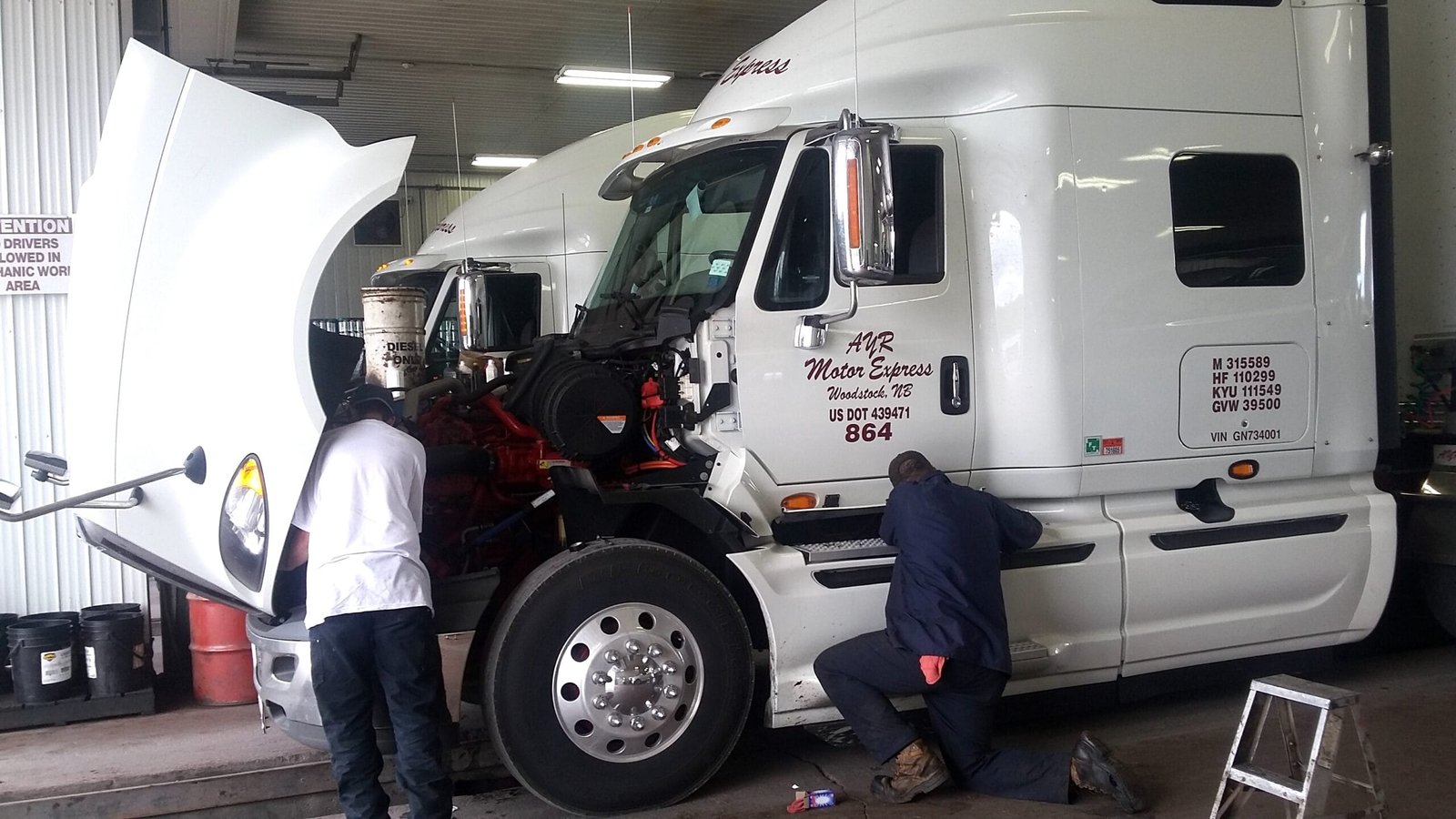
Joe Keenan, owner of Woodstock-based AYR Motor Express, said his company deals with the impact on a daily basis.
“Customers want to move the same freight for lower rates, even as our costs keep going up,” Keenan said. “When you’re competing with companies that don’t pay taxes or benefits, you simply can’t match those rates. Whether they’re headquartered here or not doesn’t matter. If they can move it cheaper, they get the freight.”
Both Keenan and Carson say the result has been a race to the bottom, with compliant carriers struggling to survive while non-compliant operators continue to add trucks and push rates lower. They say those pressures have intensified over the past year as freight volumes have declined, creating an almost perfect storm for compliant carriers.
Impact on local communities
According to Chris McKee, executive director of the Atlantic Provinces Trucking Association (APTA), the consequences extend far beyond individual companies.
“This isn’t just a trucking issue; it’s a regional economic issue, and New Brunswick is particularly exposed,” McKee said, explaining that trucking contributes more to the province’s GDP than sectors such as tourism, food services, seafood production and oil refining.
“Trucking directly employs roughly 19,000 people in Atlantic Canada and supports more than 30,000 jobs when related industries are included,” he said. “When non-compliant companies from other provinces come in and take away work from Atlantic carriers, the impact shows up in lost jobs, reduced local spending and foregone tax revenue.”
Keenan agrees.
“In small towns like Woodstock and Hartland, trucking supports the community in many ways,” he said. “Drivers and their families spend their money at local shops and services. If legitimate carriers can’t survive, everyone will feel it.”
Safety on the road
Ryan Klassen, safety and compliance officer at AYR Motor Express, said the issue is not just about money but also about road safety.
According to Klassen, compliant carriers invest heavily in training, safety programs and compliance.
“We have a dedicated staff that constantly works on improving safety through training and preventive maintenance,” Klassen said.
“When we hire a new driver, we usually pair them with another driver for several weeks before going out on their own, followed by additional training throughout their career. All of that costs money. Meanwhile, the companies that are cutting corners with payroll usually don’t invest in safety, training and maintenance either.” Klassen said, adding that this leads to unsafe situations on the road.
“We see these Driver Inc. companies hiring newly licensed drivers and putting them behind the wheel with little or no additional training. Combine that with reduced maintenance spending, and you end up with a dangerous combination.”
Impact on drivers
According to Keenan and Carson, the Driver Inc. model also exposes drivers to significant risks by stripping them of basic protections tied to employee status.
“When you’re classified as an employee and have an issue with your employer, you can go to the labour board,” Carson said. “If you’re classified as a corporation, you don’t have that protection.”
Melinda Thornton, human resources director at AYR Motor Express, has seen the effects that the Driver Inc. model has on drivers who use it.
“Drivers are often attracted by the promise of higher take-home pay,” she said. “It’s not until much later that they find out they’re responsible for remitting their own taxes and contributions.”
Thornton said she has seen drivers leave for Driver Inc. arrangements, only to return after being hit with unexpected tax bills.
“They simply didn’t understand what they were getting into,” she said.
From fines to firm enforcement
Keenan, Carson and the APTA argue that occasional audit blitzes and fines alone will not solve the problem.
“When companies get fined or go bankrupt, the people behind them often just start a new company under a new name,” Keenan said.
Carson believes labour compliance should be tied directly to a company’s operating authority.
“If you’re breaking labour law, you shouldn’t be on the road,” he said. “Just like safety violations can put a truck out of service, labour violations should have real consequences as well.”
Carson suggests linking payroll audits and labour standards compliance to carrier permits, so companies that misclassify drivers risk losing the right to operate.
Keenan echoed that view, adding that enforcement should focus more on non-compliant operators rather than on companies that have proven they follow the rules.
“We get audited routinely, because we’re easy to find and they know we are compliant,” explained Keenan. “Yet, the ones that are hiding behind shell companies hardly get audited and just keep running. That’s not right.”
Both carriers and the APTA say they welcome the federal government’s renewed attention, but remain cautious about the outcome.
“This is a step in the right direction,” Carson said. “But it’s not enough on its own. Without real enforcement, this will come back, just like it has before.”