Town updates old bylaw, discusses public response to changes
“The existing Town of Woodstock by-law 056 to regulate the collection and disposal of garbage and other materials was last updated in 1980, and it’s the oldest waste collection by-law in the province of all the ones that I surveyed,” said Woodstock CAO Allan Walker at the Sept. 22 council session.
Walker briefed the mayor and councillors on attempts to update the old by-law and the response they’ve recieved from the public so far.
For the last 46 years, residents of all dwellings, including apartments, could have unlimited garbage collected by the town. The only restrictions were that the garbage had to be neatly packaged and each package had to weigh less than 50 lbs. Waste disposal never included business and commercial accommodations, hotels or motels.
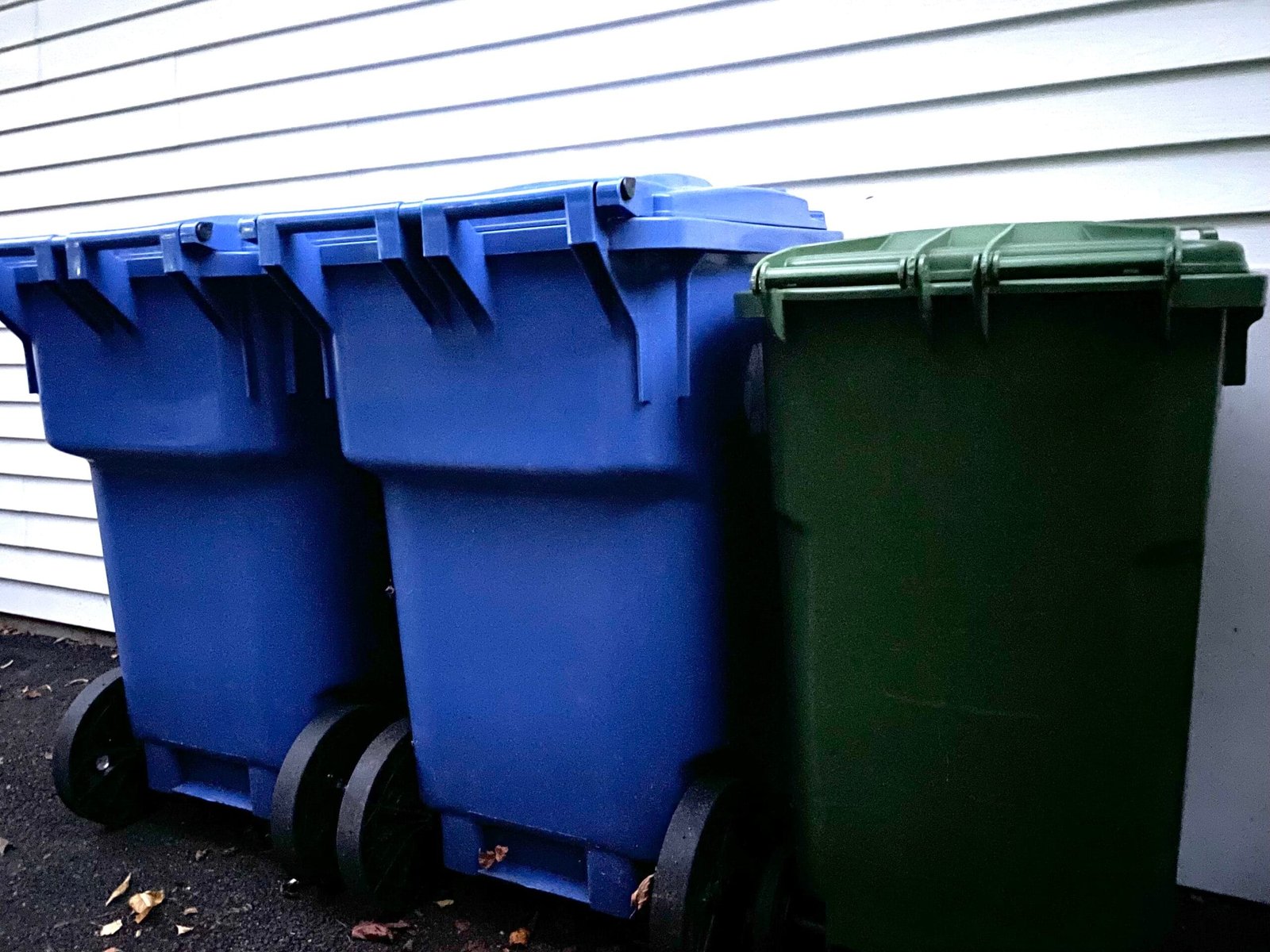
Council has been working to update the by-laws with more restrictions on waste disposal, including limiting waste pickup to dwellings of four units or less and limiting garbage to one 240-litre bin per household. They held the first reading of the new by-law on Sept. 8, and began delivering the allocated 240-litre bins to residences.
Walker revealed that since the by-laws’ first reading, the town had recieved multiple calls and correspondence from landlords and residents.
He explained that residents’ concerns largely focused on the new volume restrictions. Overall, residents were fine with using bins but felt the bin size and the limit of one per residence were not enough to meet their needs.
“In the past there were no standard bin sizes, so some residents have 360-litre bins and some have 240-litre bins and some have no bins,” explained Walker. “The concern expressed is that a single 240-litre bin is not enough capacity.”
He said the town is surveying other municipalities for their volume restrictions. So far, they’ve found that many mention package size but not volume.
Walker presented two options to council.
The first option was to keep the new bylaw as is, with a restriction of one 240-litre bin per household, while allowing one extra bin at an additional annual cost. The second bin would require a ticket or sticker to show it is allowed for pick-up.
In the second option, he suggested allowing one extra bin, which could also be 240 litres like the first or a 360-litre bin, since many already possess a bin that size. For this option, they would continue delivering 240-litre bins to households, but he suggested they still limit each residence to no more than 2 bins.
Walker said the biggest complaints the town had received from property owners were concerns that waste collection would be restricted to dwellings of four units or less. They were concerned that waste disposal costs would then shift to landlords and affect their rent.
Walker said he surveyed 14 communities to see when they last updated their by-laws and whether they included houses or apartments. He explained to council that outside of Sussex, no community has included multiple apartment buildings since 2000. Almost all of those by-laws, updated since 2000, have included only 4 or fewer dwellings.
“This really does align us with the rest of communities out there,” said Walker.
Because of complaints from several apartment building owners, the town conducted a survey. Walker explained that some landlords didn’t realize they were already paying for disposal through their bin rentals and that the new by-law changes wouldn’t affect them. Other apartment owners have been delivering their own waste, with the town footing the bill. Walker said they identified three unit owners whose costs the town has paid.
“The combined cost to the town for these three property owners was calculated as $36,548 for 2025,” said Walker. “All other large apartment owners have accounts at the Southern Valley Transfer Station and pay their own collection and disposal costs. So we have an inequity in how apartment owners are treated today that must be corrected. So today some apartment owners pay for their own disposal. The town pays for others. So one way or the other, it’s got to be the same.”
Walker also said they would be stricter about institutions, businesses, and commercial accommodations providing their own waste disposal going forward, noting that places like care homes would be affected. Small businesses that work out of what is primarily their residence would not be affected, as long as they can restrict their waste to the allocated bins.
Mayor Wright pointed out that this initiative isn’t just in Woodstock but stretches from Tobique Valley to Lakeland Ridges. Of those municipalities, Carleton North was the only one to opt for the 360-litre bins. A big part of the initiative is to decrease expenses for municipalities while also encouraging more recycling.
“I think the objective was, and I can’t speak for those who were here before me, but is to cut down on waste,” said Wright.
Councillor Keith Bull asked whether exceptions could be made for not-for-profits, citing two in his ward that had recently been told they would have to handle their own waste collection from now on.
Councillors Scott Dunlop, Will Belyea, and May Atkinson all agreed they would like to allow a second bin, up to 360 litres, since many already own one. Deputy Mayor Mark Rogers said he was fine with allowing a second bin, but noted it would cost the town more than the strict one-bin allowance. Councillor John Dolimount pointed out that different households have different needs. He believed every residence should be allowed two bins, at least temporarily, and that the second bin shouldn’t be an additional charge, with the option to revisit it later. Otherwise, there were concerns that people’s surplus waste would end up in recycling or tossed on the roadside. Both Councillor Dolimout and Councillor Gaddas said the town should have communicated the information better. They stressed that the town should have acted sooner to reach people more effectively, with much clearer information than they felt had been provided to date.
Councillor Arthur Slipp was concerned about the increased cost to landlords and its effect on tenants. All councillors agreed they needed to apply the same rules fairly to all landlords.
The by-law will be sent back to committee for revision so it is ready to return to council for Oct. 13. Walker informed the council that garbage pick-up will continue as usual until the by-law’s third reading passes.