Homeowners cite odour, noise, falling property values while arguing the facility shouldn’t receive farm‑practice protections
On Friday, Sept. 4, homeowners living near a potato chip plant in Woodstock and representatives of Covered Bridge Potato Chips gathered at the Fredericton Inn to present their cases to the provincial Farm Practices Review Board (FPRB).
In May, 16 homeowners in 17 houses adjacent to the chip plant filed individual complaints. The complaints concerned plant disruptions such as odour, noise, intense lighting, heavy truck traffic, and vegetation removal.
The hearing was conducted under the Agricultural Operations Practices Act (AOPA) and the applicable regulations.
The FPRB said the hearing aimed to gather relevant information from all parties, focusing on jurisdiction.
Residents argument
Basile Chaisson, the lawyer representing the residents, argued that the facility’s activities fall outside AOPA’s definition of an agricultural operation and therefore are outside the board’s jurisdiction.
Chaisson said the building’s use changed significantly over the past decade and no longer resembles an agricultural operation.
Chaisson argued that nothing is grown at the Woodstock site and that all agricultural activity happens in Jacksonville.
He argued that Covered Bridge is trying to link several Albright-family companies to claim farm status, despite their separate corporate structures and directors.
Chaisson also stated the facility has functioned as a warehouse and processing plant rather than farmland and accused Covered Bridge of trying to “bring agricultural operation into Woodstock” through legal interpretation rather than actual farming activity.
He argued the Right to Farm Act must not be stretched to cover industrial processing.
He believes that if the FPRB agrees that the operations are not agricultural, it should have no jurisdiction over the dispute.
“The voices of my clients were not heard locally, nor were they considered by the company,” said Chaisson
Covered Bridge presents its case
Sheila Mecking, the lawyer for Covered Bridge Chips, argued that Covered Bridge is an agricultural operation, stating that the OPA uses the term “agricultural operation,” which she said includes processing farm products.
“A person who carries on an agricultural operation can be a corporation,” said Mecking.
They cited the Natural Products Act, which defines farm products as both raw vegetables and vegetable products.
“The Natural Products Act says is: Farm product is animals, meat, eggs, poultry, wole, milk, dairy products, through products, vegetables, and vegetable products,” said Mecking.
“Vegetable product, that’s the potato chip, the product that derives from the vegetable,” said Mecking.
She also argued that Covered Bridge’s processing work is directly tied to its farming operations, noting the company sources potatoes from a related farm, instead of external suppliers.
Mecking told FPRB that the act doesn’t require farming to occur at the same physical location as processing, and that agricultural operations can include multiple sites.
She contends that legislation recognizes processing as part of agricultural activity and that the Woodstock facility therefore falls under AOPA’s protection.
Decision pending
The board said all parties would have a fair opportunity to present evidence and submissions.
It did not indicate when the board will release a decision on jurisdiction. The nuisance complaints cannot proceed until the board determines whether the operation falls under AOPA.
Residents speak out
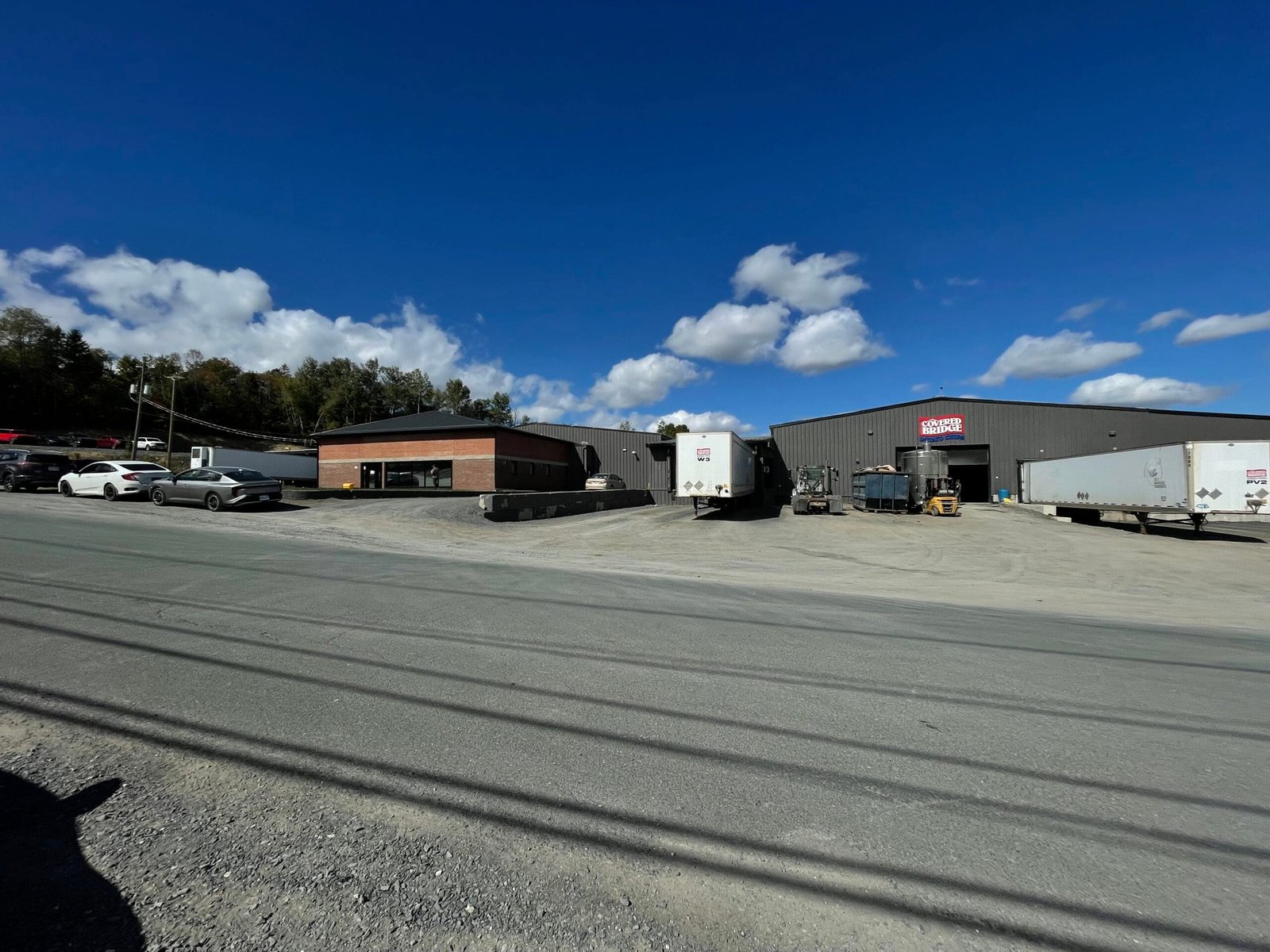
Covered Bridge Potato Chips’ original plant in Waterville burned down in March 2024. The company initially turned its Charles Street warehouse into a seasoning plant, while other factories fried the chips.
In 2025, the company installed three chip fryers and expanded the Woodstock plant.
The new facility’s fryers run on a 30,000-litre propane tank located near homes in the neighbourhood, prompting safety concerns among residents.
Gordon Porter is a resident of Woodstock. He has lived in his home, adjacent to the plant, for 51 years. He said the situation is not only upsetting but has also impacted people economically. His neighbour saw a $70,000 drop in their home value because the plant is in their backyard.
Porter and other residents are still not happy after Friday’s hearing.
“In August 2024, the Town changed its by-law to allow ‘food processing’ in the industrial park. Now the Covered Bridge lawyer describes that same operation as agricultural. Changing the terminology doesn’t change the reality of what is happening there,” said Porter.
“It seemed to me the Covered Bridge lawyer’s case rested on changing the label: don’t call it a ‘manufacturing facility,’ call it ‘an agricultural operation.’ Then, somehow, a large industrial plant in the middle of a town is supposed to receive protections intended for farming,” said resident Susan Ryan, who also attended the hearing.
“The Farm Practices Review Board protects farmers from complaints arising from normal farming activities. The Covered Bridge chip plant is not a farm. It’s as simple as that,” said Bob Harrison, who lives near the plant.
The company has yet to announce plans for the old factory site.
– with files from Theresa Blackburn.