Management says actions are in “full compliance” with regulatory requirements
In a written statement issued on Friday, May 8, the management of Covered Bridge Potato Chips defended their actions in the wake of legal proceedings being brought against the company by neighbours in Woodstock.
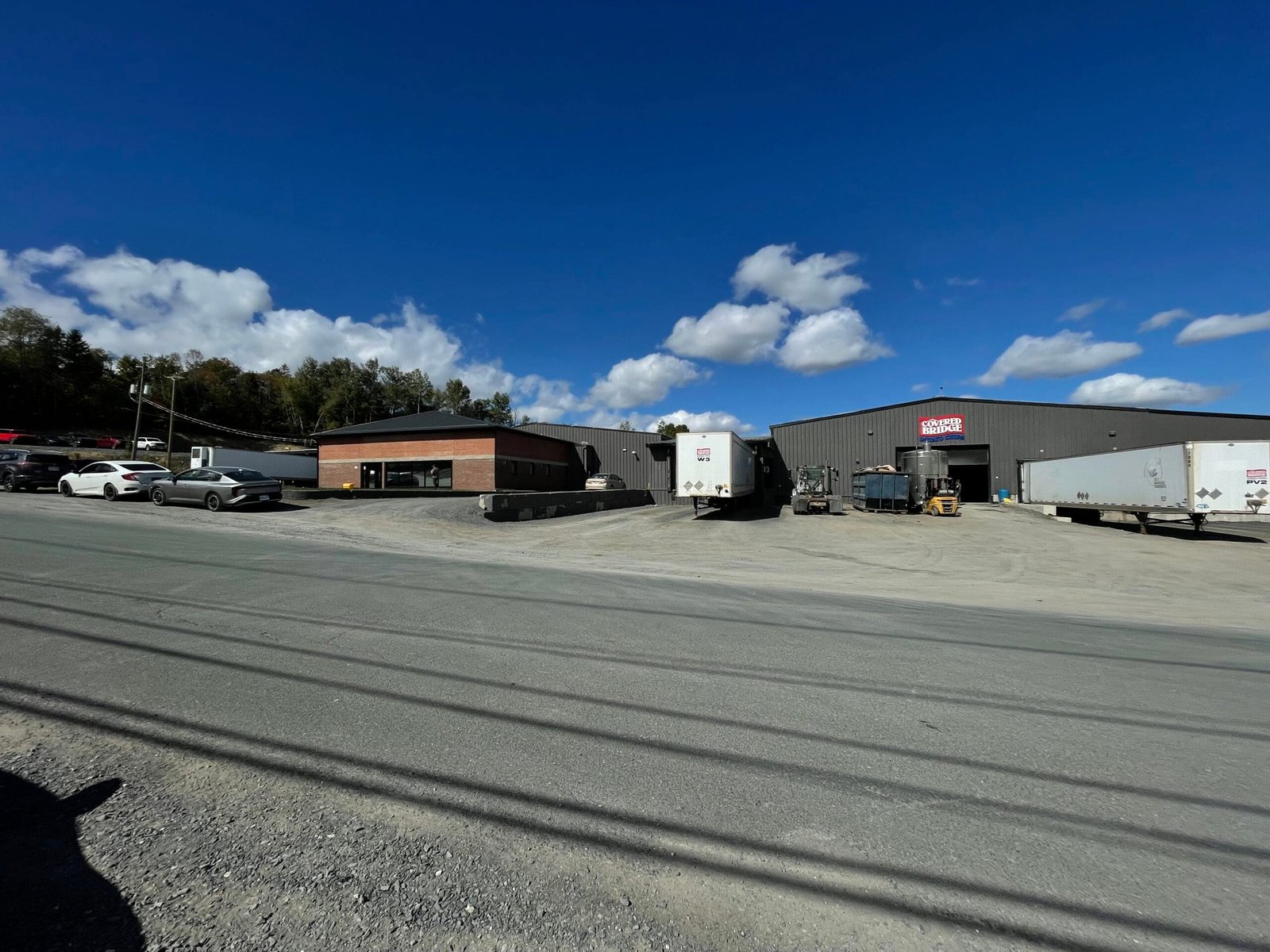
In 2024, the company’s plant in Waterville was destroyed by fire. Shortly after, Covered Bridge Potato Chips converted a warehouse on Charles Street in Woodstock into a seasoning plant, with chips fried elsewhere. In 2025, they made the plant its permanent location after the Town of Woodstock amended its industrial park bylaws to allow food processing.
Since then, the company has removed a wooded area that served as a buffer, without the town’s prior permission. Then it expanded the plant and began full production, which neighbours say disrupts their lives.
Nearby homeowners complained to the town and the province about noise, odours, and safety concerns, citing the 30,000-litre propane tank installed near a residential area.
“We want to continue to reassure our neighbours and community at large that we are committed to the plan of action set in motion last year,” wrote Covered Bridge Potato Chips Executive Vice President Brook Dickinson in the company’s release.
“As developments at our location on Charles St. in the Woodstock Industrial Park continue to evolve, we are operating in full compliance of all applicable municipal and provincial regulatory requirements.”
Dickinson then referenced his company’s visit with two members of the group Our Town, Our Voice, in Nov. 2025.
“We heard their concerns and outlined the measures we are implementing to be a respectful and responsible neighbour within the industrial park.”
Dickinson said those actions include but aren’t limited to:
- Adding demisters to our stacks on the roof, mufflers in our facility to deaden outgoing noise
- Establishing a large (regulatory meeting) sized fence in the open gap between our plant and the nearby subdivision, supported by a substantial landscaping investment, including a wide variety of trees and bushes
Dickinson notes that with spring’s arrival, the company is “taking action to execute the remaining parts of those plans in the coming weeks.”
He concluded the statement by explaining the company’s commitment to the Town of Woodstock and the greater Carleton region.
“We contribute regularly and give back to the community that has supported us for over 17 years, including the last two years after our plant fire. We appreciate the continued support as we work to create more jobs here in Carleton County.”
On Monday, May 4, a lawyer representing 17 residents who own 16 homes in the Poole Street subdivision launched legal proceedings against the company.
The group is first taking their case before the provincial Farm Practices Review Board (FPRB).
“The logical place to start was before the board,” said lawyer Basile Chaisson, K.C, with the Bathurst law firm Chaisson & Roy. “We need to clear up if the Farm Practices Review Board has any say. We are confident we are going to cross that threshold, and the board will decline jurisdiction, and that will allow us to move on to the Court of King’s Bench.”
The FPRB addresses complaints related to odour, noise, dust, vibration, light, smoke, or other disturbances originating from an agricultural operation. The board enforces the Agricultural Operation Practices Act, which was established to protect farmers from complaints arising from normal farming operations.
A 2023 lawsuit in Richibucto against Coastal Shell Products was initially rejected on the grounds that the neighbours of a shellfish company hadn’t first complained to the board. The plant produced agricultural fertilizer.
Chaisson said this precedent meant homeowners had no choice but to go to the board first.
“Once we get through this, we will be taking this to the Court of King’s Bench,” said Chaisson.
He said there is no word yet on when the FPRB will hear the case.